



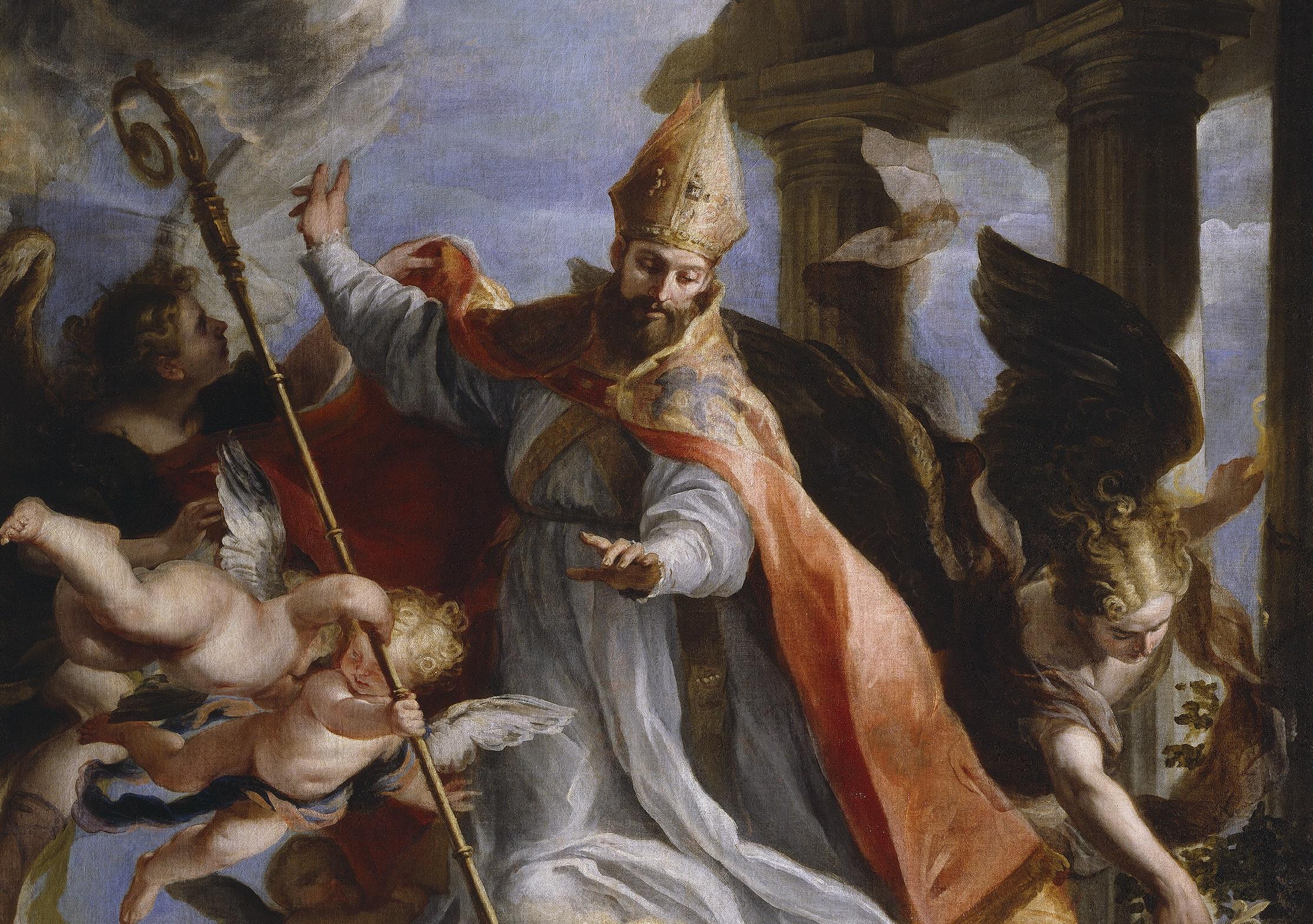
Willmer Moyetones reflects on Augustinian leadership: an authority understood as service, inspired by St. Augustine and his vision of the community as “one heart and one soul towards God”.
St. Augustine, a natural leader
St. Augustine can be considered a natural leader. Throughout his life, he always stood out for leading groups: his friends, his students or communities with whom he shared and passed on his way of life and thought.
A significant example of this was the experience at Casiciacowhere he gathered his friends to reflect together on the Word of God. He also firmly defended his ideas, even in the midst of arguments.
His style of leadership continues today. The various Augustinian families and institutions that follow his Rule do so because his thought, vision and way of exercising authority continue to inspire.
Leading as a service, not as a domain
Leading, in this context, does not mean exercising power as domination, but as the ability to give the best of oneself to build the common good together.
St. Augustine reminds us that authority in the Church is a service, not an honor. service, not an honor. Thus, leadership means being able to give the best of myself, so that we can build together the common good.
It is a burden assumed with love: “My love is my burden,” said Augustine, emphasizing that we must serve with charity.
The true leader is the one who, with zeal and dedication, encourages and guides others on the path to God.
He cannot limit himself to those who obey him without question, but must accompany everyone, helping each one according to his needs in order to advance towards the common goal.
Leadership in the Rule of St. Augustine
Our father St. Augustine, in Chapter 7 of his Rulegives us clues to be leaders of communities:
“Obey the superior as a father, reverently, so as not to offend God in him; and much more the presbyter, who has the care of you all in his charge” (Rule 7:1).
Augustine avoids the term “superior” and prefers to speak of “prior” or “superior superior”, emphasizing a horizontal conception of authority. Although the superior has responsibility in the community, he remains just another brother, called from humility to serve out of love.
The superior must guide, orient and be visible to the confreres, not to seek privileges, but to fulfill his service with transparency and closeness.
Point 2 of the same chapter 7 states:
“Let him who presides over you be happy not by the dominion of his authority, but by the service of his charity […] Let him be an example to all of you of good works […] And, although both attitudes are necessary, let him prefer to be loved rather than feared” (Rule 7:3).
This excerpt summarizes the main responsibilities of the leader: guide with love, correct with justice, sustain with patience, and be an example of life..
Loved rather than feared
Leadership is not based on libido dominandi (the desire to dominate), but on active and humble charity.
A good leader should seek to be loved rather than fearedBut that does not mean abdicating his or her responsibility to maintain discipline. Correcting is not always popular, but it is necessary for the common good.
The leader has vision, and the followers share the mission. The Augustinian vision is clear: “one soul and one heart directed towards God”. This vision guides community life and also the exercise of leadership.
The Good Shepherd, model leader
In sermons 46 and 47, St. Augustine presents the Good Shepherd as a model leader: one who edifies his sheep by the witness of his own life.
In contrast, the bad shepherd kills even the strong sheep – that is, the convinced believer – with the works and examples of a life not lived according to God’s plan.
For this reason, the leader should not limit himself to exhorting compliance with the rules: he himself must be the first to live them. His authority does not distance him from the community, but commits him even more to know and respond to the needs of each brother.
Conclusion: a charitable leadership
In short, Augustinian leadership is a vocation of service.
Authority must be exercised with humility, closeness and consistency, so that it is respected not out of fear, but because of the witness of a life given to others in charity.