



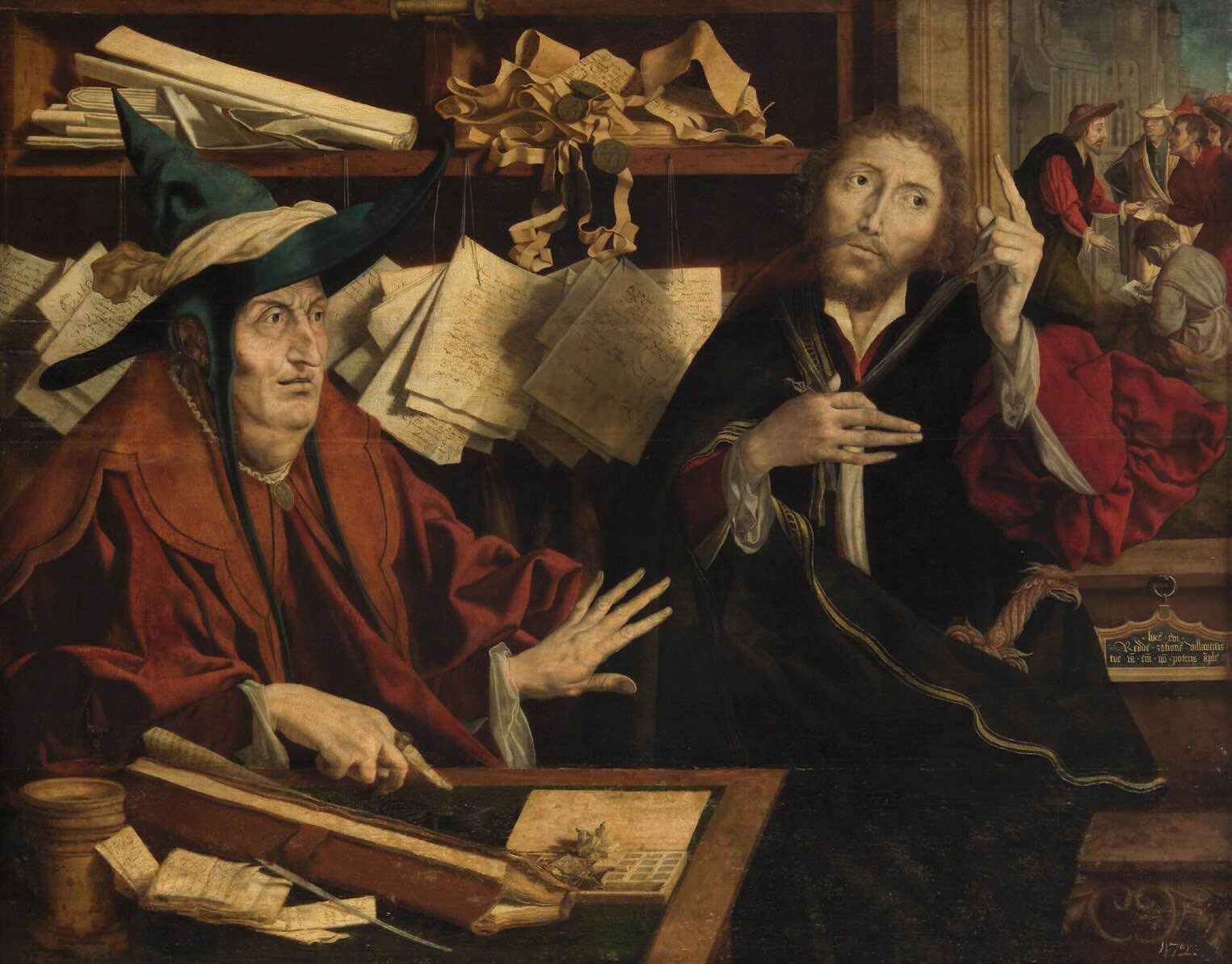
In this commentary on the Gospel, Friar Luciano Audisio invites us to look at the parable of the unfaithful steward from the key of mercy and fidelity in small things. A teaching to discover God in the everyday, to lighten the burdens of others and to live free from the slavery of riches turned into idols.
The parable of the unfaithful steward
This Sunday’s Gospel poses a profound question: where is God in our daily lives? In the midst of so many material occupations, work, family, small and big responsibilities, can we find God?
Jesus offers us a provocative parable: that of the unfaithful steward. A dishonest man who, on the verge of being fired, acts shrewdly and reduces the debts of those who owed his master. He does this not out of generosity, but out of self-interest.
And yet, Jesus surprises us: even from this character we can learn. Because, although motivated by selfishness, he knew how to alleviate the burdens of others.
Stewards of what God entrusts to us
Here is the teaching: we too are called to be stewards of what God entrusts to us.
And we do not live in a clean or perfect world: it is full of injustices, power struggles, interests, scandals. But even in that context, our mission is to lighten the burdens that others carry, to make life lighter, to liberate rather than oppress.
We all know what it means to live under the weight of “debt”: the demand to be perfect, the pressure to respond to the eyes of others, the stress of not getting everything done.
Sometimes we run, as on the highways or in the subway, without knowing very well “to whom we should pay”. Jesus invites us to change that logic: to tell those around us that they do not owe us so much, that they are not obliged to pay with their life, their affection or their perfection.
It is about treating each other with mercy, tenderness and understanding.
To be faithful in the little
The Gospel adds another precious key: “who is faithful in a little”. In Greek, the word is πιστός (pistós), from the same root as πίστις (pístis), “faith.”
To be faithful in the little is to have faith in the small, to live ordinary things with trust in God. This is our path: to discover the Lord in the everyday, in the simple, in the small.
For this reason, the Eucharist is the great school of faith. In a piece of bread and a few drops of wine is the mystery of God. If we learn to find him there, in the little, we will be able to recognize him later in everyday life: in the love between spouses, in the care of children, in friendship, in work.
And even if it is sometimes difficult for us, we can make this prayer our own:
“Lord, help me to see you where it is most difficult for me to recognize you.”
You cannot serve two masters
The Gospel ends with a clear warning: “You cannot serve two masters”.
One cannot serve God and money. Jesus uses the word μαμωνᾶς (mamonás), which designated wealth turned into an idol.
The great obstacle to seeing God in the everyday is when we absolutize the material, believing that salvation depends on money, success or things. But the created is not God: it is a sacrament, a sign of his presence.
To be faithful stewards
This is the leap of quality in the Christian life: to be pistos, to be faithful in the little, to live with faith the small, so that everything – the great and the small, the simple and the complex – becomes a place of encounter with the living God.
Let us ask today for the grace to be faithful stewards: capable of relieving burdens, of recognizing God in the small things and of freeing ourselves from the idolatry of things, in order to live free in the love of Christ.