



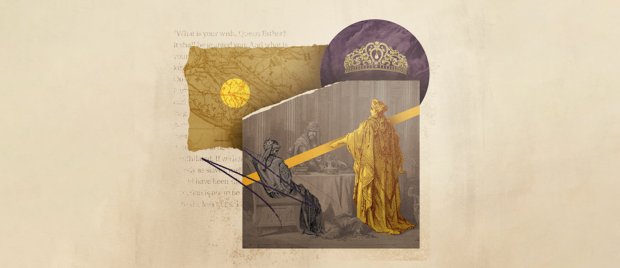
In this Sunday reflection, Friar Luciano Audisio Luciano Audisio meditates on the parable of the unjust judge and the widow, which Jesus proposes to teach us to “pray always without losing heart”. A lesson of faith and hope: when God seems to be silent, in reality he is teaching us to love with greater purity and trust.
Life-sustaining prayer
This Sunday’s liturgy presents us with a parable that only Luke preserves: that of the unjust judge and the widow.. Jesus proposes it “to teach that it is necessary to pray always without losing heart”.
It is not a matter of repeating words endlessly, but rather of keeping the heart in constant dialogue with God. To pray always means to live in his presence, to let all of life become prayer.
“When we pray, life is uplifted; when we fail to pray, the soul is weakened.”
Like Moses on the mountain, who held up his hands while the people fought, prayer is what keeps our hope alive. It is not a luxury for the pious, but a vital necessity for the believer. vital need of the believer.
An unjust judge and a surprising teaching
Jesus, with his usual wisdom, does not present a shining example, but a provocative one: a judge who “neither fears God nor cares about men”.
He is an unsympathetic figure, a symbol of everything a judge should not be. But Jesus uses this image to help us purify our idea of God. purify our idea of God.
Sometimes, within us, there remains a distorted vision of the Lord: that of a distant, severe judge who does not seem to listen. This parable confronts us with that temptation.
“Even if God were like that judge-which he is not-he would end up listening.”
The silence of God and the pedagogy of love
Why does the Lord not respond immediately to our prayers? St. Ignatius of Loyola used to say that God sometimes keeps silent in order to make us grow.
He wants us to move from seeking God’s gifts to seeking the God of gifts. the God of gifts. In waiting, our heart learns to love more purely, without calculation or impatience.
At other times, the apparent divine silence reminds us that everything in life is grace. everything in life is grace. We are not the authors of the gifts we receive; everything comes to us freely.
“God’s delay is not absence: it is pedagogy. It educates us to gratitude and to trust.”
The widow: image of the believing soul
The figure of the widow encloses a profound beauty. She represents the one who has lost the most important relationship in her life and lives with a desire that will not be extinguished.
That widow is the human soul: we all carry within us the nostalgia for a love that gives full meaning to our existence.
To pray is to keep alive that nostalgia, that waiting.
“To have the heart of a widow means not to resign oneself to emptiness, but to turn lack into hope.”
Believe that, even if the answer is delayed, the Bridegroom will come; that the love of God is not forgotten, even if at times it seems hidden.
Faith that perseveres
That is why Jesus concludes with a question that spans the centuries:
“When the Son of Man comes, will he find faith on earth?”
He does not ask if he will find temples or ceremonies, but faith. Faith that perseveres, faith that hopes, faith that prays even in the night.
Perhaps many of us have experienced this disconcerting silence of God, but the Gospel invites us not to tire, to keep on calling.
“Prayer does not change God: it changes us.”
He opens us to his way of loving, teaches us to trust, prepares us to receive.
The power of perseverance
In the end, the widow does not win by her strength, but by her perseverance. So too we: we need not cry out louder, but trust more deeply. trust more deeply.
God does not allow himself to be convinced by insistence, but is moved by love. And that love-faithful, patient and silent-is the true true justice that fulfills every expectation.